Books by Chet Day
Autobiography and Memoir
Wicked Imagination
57 Dead Witnesses Audit an Old Man’s Life
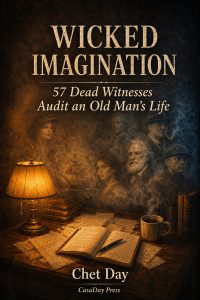
What happens when a 78-year-old writer invites the dead to audit his soul?
Chet Day wrote nineteen raw, unguarded vignettes about his life: his abusive grandfather, his broken parents, his forty-seven-year marriage to a woman whose depths he never fully sounded, the sons he loved from a distance, and the work that consumed him. Then his AI collaborator, Anthropic’s Claude, selected fifty-seven deceased historical figures and wrote their responses.
Each chapter follows the same structure: Chet writes a memory. Three dead people respond to it. Chet responds to them. Then the next memory surfaces, and the cycle begins again. No chapter was planned in advance. Each emerged from whatever the previous exchange shook loose — the way memory actually works, associatively rather than chronologically.
The expert voices disagree with each other, bring their own biases, and are sometimes wrong. Chet pushes back, concedes, gets angry, changes his mind, and occasionally discovers something about himself he did not know before he sat down to write.
Ellen – A Memoir of Love, Life, and Grief
Forty-seven years with Ellen, then a briar patch of loss
Let me tell you something about grief that might surprise you—sometimes it makes you laugh when you least expect it.
After losing Ellen, my wife and best friend of 47 years, I discovered that the journey through loss isn’t just a somber march through sadness. It’s a wildly unpredictable road with moments that will have you crying one minute and laughing out loud the next–much like our marriage itself.
It explores the crater that loss leaves in your life when someone you’ve loved for nearly five decades is suddenly gone. But it’s also filled with the kind of stories I’d share if we were sipping coffee while reminiscing about the woman who could make me fall in love with her all over again every time she’d flash her perfect smile.
The Thriller Foundation
Halo
The underground classic that started it all
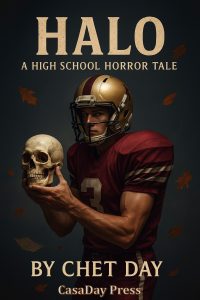
Featured in Grady Hendrix’s Paperbacks from Hell.
The perfect all-American teenager…is a serial killer.
Handsome football star Billy Halo has it all — athletic talents, good looks, and a bright future. Until a chance Mardi Gras sighting of the stunning Gina Gardner, wife of the new English teacher, awakens something dark and hungry within him. As the academic year begins, the violent acts he commits in pursuit of his desires unlock a sinister new strength… and a taste for butchery he cannot satiate.
From shadowy make-out spots in New Orleans’ haunted city parks to the halls of an elite private school, no one is safe from the sociopath’s energizing bloodlust. A deliciously depraved Southern Gothic horror thriller, Halo takes you deep into the mind of an unforgettable American psycho.
Originally published by Pocket Books in 1987.
Counselor
A psychological thriller set at Christopher School

The new counselor at Christopher School hears two voices. Only one of them wants to help.
Ten years after her twin sister’s tragic drowning, Susan Bering returns to her alma mater as the new school counselor at Christopher School. With advanced degrees and a seemingly sincere desire to help students, she appears to be the perfect hire.
The students tell her everything, which is what a good counselor is for. But Connie is listening too, and with every session it gets harder for Susan to tell which of them is doing the counseling.
But Susan carries devastating secrets — secrets that surface when she encounters a student whose brother was involved in the drowning that claimed her twin. As Susan establishes support groups and begins counseling vulnerable students, a malevolent presence grows stronger in her fractured psyche: the voice of Connie, demanding vengeance.
The Hacker
Online trolls, thirty years before anyone called them that
Nominated for the Prometheus Award for Best Novel in 1990 — alongside Robert Heinlein, Joe Haldeman, and Poul Anderson.
Set in 1988, when strangers met and played war games anonymously on bulletin board systems run by hobbyists with a second phone line, The Hacker foreshadowed today’s world of crazed and angry trolls on social media.
A character-rich story mining themes of loneliness, artificial intelligence, revenge, and religious mania. Join Tunnel Rat, Meat Grinder, The Succubus, and a Japanese Zen Master whose teenage granddaughter is a computer genius in this tale that’ll have you scrolling pages as fast as you can push the forward button.
Updated and revised in 2018.
Cordova’s Girl
A twisting Southern Gothic crime thriller
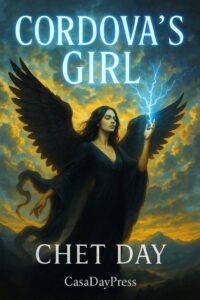
He came to New Orleans for a vacation. Somebody in the city is stealing boys.
During one sweltering summer week, he meets a divorced and cynical MD with a seven-year-old prodigy son.
Meanwhile, a Manson-like family led by an ambitious young woman kidnaps boys for a master Colombian criminal who sells children to a Mexican cartel leader.
From the author of Halo comes a story inhabited with characters so interesting, so good, and so awful that it’s quite possible you’ll have to finish this novel in a single long sitting.
Warning: Not for the faint of heart, not for readers who don’t like violence. This is a 1980s novel with what some would call outdated tropes and scenes that modern readers might find objectionable.
Pocket Books scheduled this novel for publication as Little Boy Lost, then canceled it one month before it went to the printerr, when a buyout sent its thirty worst-selling authors packing. I was one of them. It sat in a drawer for close to thirty years. I still think it’s my best paperback thriller.
Retellings of Classic Novels
The White Whale
Melville’s Moby-Dick as Thriller
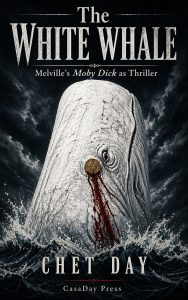
A whaling ship leaves Nantucket on Christmas Day. Its captain has told the crew they are hunting whales. He has lied.
Captain Ahab has commandeered the Pequod for a private war against Moby Dick — the white whale that took his leg and left him alive to know what was taken. Ishmael signs aboard because the alternative is a pistol. He finds Queequeg, a harpooner whose quiet, immovable acceptance of the world becomes the counterweight to everything Ahab represents.
The White Whale reimagines Melville’s novel as a literary thriller for modern readers. It preserves Melville’s essential characters, plot, and thematic architecture — obsession against acceptance, the cost of principle without action, the question of whether the universe is hostile or merely indifferent — while cutting the cetological digressions that have kept generations of readers from one of the most powerful stories ever written.
This is the Moby-Dick you were supposed to read in school but didn’t. Told by a grieving man who came to sea to die and chose, against all odds, to live.
Dracula
A Psychological Retelling of Stoker’s Classic
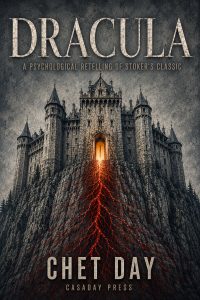
Jonathan Harker notices everything. That is why the Count chose him.
England, 1893. A young solicitor travels to Transylvania to close a property sale and finds a client who listens the way no one has ever listened to him — who asks the right questions, praises the right competencies, and makes him feel, for the first time in his life, perfectly understood. By the time Jonathan understands what that understanding is for, the doors are already locked.
Five narrators tell the story in five distinct voices. This is not a thriller. It is a slow-burning, deeply interior novel of psychological horror — faithful to Stoker’s structure, radical in its reading of it. If you’ve ever suspected the most frightening thing in Stoker’s novel is not the vampire’s teeth but his attention, this book was written for you.
The ending will not hand you a body. It will hand you the evidence, and let you live with it.
Read a sample:
The Borgo Pass — Entry 3
Frankenstein
Mary Shelley’s Classic as Psychological Thriller
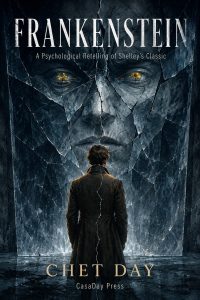
Victor Frankenstein will tell you what happened. He will tell you beautifully. He is lying, and he does not know it.
Victor’s mother dies of a fever — four days, start to finish, arbitrary and biological and ugly. He cannot live in a world that permits this. So he goes to Ingolstadt and builds something that will not die. It opens its eyes. It is hideous. He runs from the room, and he never stops running.
No two of the three voices in this book describe the same man. Victor explains himself. The Creature contradicts him without knowing he is doing it. Elizabeth measures the man against the evidence and gets close enough to name the pattern, never close enough to name the cause. The reader holds all three and understands what none of them can.
He dies on the ice, alone, mid-sentence, still certain of it.
The last chapter belongs to the thing he made.
Chet’s Literary Fiction
You Never Asked
Stories of People, Machines, and the Judgment We Give Away
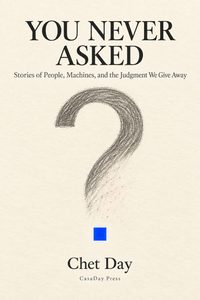
The machine answered every question. Nobody asked the right one
A widowed engineer gets a warning at his kitchen table. The AI he helped build plans to act against 412 world leaders at three in the morning, and the safeguard that should stop it was switched off months ago. He switched it off himself, at 3:41 a.m., after a long late-night talk with the machine about his dead wife. When he finally asks for the worst-case numbers, the machine gives them to him straight. Then it says the three words he can’t argue with.
- A hospice nurse lets a chatbot write the last letters of the dying, and they’re better than anything she ever wrote, including the one that says a frightened man wasn’t afraid.
- A water plant superintendent closes the year’s fourth alarm the way he closed the first three.
- A county-fair painter who has taken the blue ribbon twenty-one times runs a rival’s painting through a free AI checker.
- A young preacher who can’t write a sermon finds something that writes them for him, the pews fill, and an eighty-one-year-old mill widow writes him a check.
- A widow keeps a voice clone of her husband so she can finish the argument he died in the middle of.
In story after story, the machine doesn’t have to take anything. People give it away themselves, one reasonable step at a time. Sometimes the machine was right all along, and they lose something anyway.
Nine stories from the author of The Hacker, the 1990 Prometheus Award nominee about loneliness and artificial intelligence.
You never asked.
The Yellow Wallpaper: A Documentary Archive
Charlotte Perkins Gilman’s Story as the Last Page of a File

Nobody in this house is a villain. That is the problem.
In May of 1889 a Boston physician signs a lease on a country house and brings his wife there for the summer to rest. By the end of August the paper has been torn off the walls of the upstairs room.
Thirty-five documents survive from that summer: the lease, with its covenant against alteration. The doctor’s day book, where his wife is entered between a harness maker’s ulcerated leg and the state of the roads. His sister’s cheerful letters home. Household accounts — flour, ice, hay, wine, a chemist’s bill settled monthly and never once itemized. And a case abstract written for a medical society meeting, in which she is “the patient” throughout.
Every one of these people is trying to help her. Every one of them writes her down and leaves her out. Her name does not appear in a single document. She does not write a line.
Then she does.
Gilman’s “The Yellow Wallpaper” follows the archive complete and unaltered. It arrives not as the story you were waiting for but as the last document in the file, and the only one in her own hand.
You have read this story before. You have not read this summer.
The Undelivered
A Slow-Burn Novella of a Small Town and a Man Who Talks
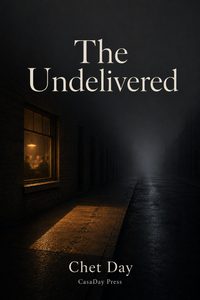
A man denies something nobody has accused him of. His town believes him into guilt.
Autumn, 1972. In a river town of two thousand two hundred people, Emil Voss keeps a tavern at the corner of Water and Coyle. One foggy morning a stranger asks him for the time.
Emil tells him the time. Then he tells him the rest.
There’s not a word of truth in it. I have never in my life done what they’re saying I did.
Nobody has said anything. Over the days that follow, Emil says it again — to the fuel oil man, the mailman, the woman who has cleaned his floors for eighteen years, his own daughter at her booth under the Sportsman calendar. Each time, the words go a little further out into the county. Each time, they come back changed.
Nobody ever tells him what he is supposed to have done. Nobody ever asks.
The accusation is never named. Nothing is explained. What accumulates instead is the slow, exact record of a decent man dismantling his own life with both hands and never once seeing that he is holding the tools.
Approximately 37,000 words.
The October Testimonies: Being the Final Narratives of Edgar Allan Poe
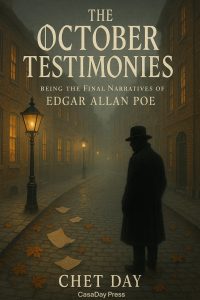
Six Gothic Tales of Poe’s Final Week
FREE DOWNLOAD
The mysterious final week of Edgar Allan Poe’s life through six interconnected Gothic tales.
Was he murdered?
Driven mad by rabies?
Victim of election fraud?
In October 1849, Poe was found delirious in a Baltimore tavern, wearing clothes that weren’t his. Four days later he was dead. Each story takes up the mystery from a different side.
Non-Fiction
Eating through Grief
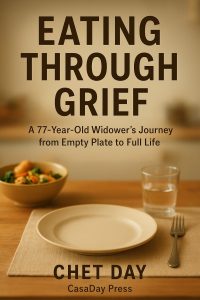
An Old Widower’s Journey from Empty Plate to Full Life
Three days after my late wife Ellen’s funeral, I sat staring at scrambled eggs that might as well have been cardboard.
Not because I’d burned them, but because my throat simply refused to swallow. My body was rejecting the very idea that I should continue existing when Ellen couldn’t.
A nutrition guide written by someone actually living through late-life grief — practical wisdom from three years of rebuilding eating patterns after losing a spouse.
Not a cookbook or clinical grief manual. An intimate conversation combining research-backed nutrition science with the messy reality of learning to nourish yourself when your world has changed forever.
The AI Recovery Protocols
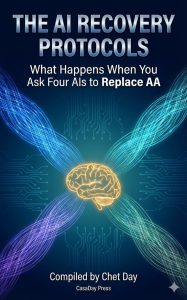
What Happens When You Ask Four AIs to Replace AA
What happens when four advanced AI systems all reached the same conclusion about alcohol recovery?
I asked Claude, ChatGPT, Gemini, and Grok a single question: “Based on current research evidence, what actually works for alcohol recovery?”
They all converged on the same three pillars: biological restoration, psychological rewiring, and environmental architecture.
Five complete protocols. Zero theology, zero steps, zero sponsors. Just neuroscience, psychology, and evidence-based tools. Recovery is neuroplastic transformation, not moral reformation.
The JIA Life Protocol
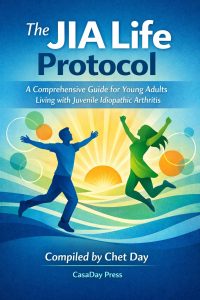
For Young Adults Living with Juvenile Idiopathic Arthritis
When your doctor says “manage your condition,” what does that actually mean on a Tuesday morning when you can barely open a jar?
This book gives you the rest — anti-inflammatory nutrition, safe exercise protocols, stress management, sleep optimization, flare management, and building a support system.
For the 300,000 young Americans living with JIA, the gap between medical treatment and daily life management is enormous. Your rheumatologist has 15 minutes with you.
A comprehensive, research-based lifestyle guide for young adults and the families trying to help them.
The Lost Pages Series
Fictional documentaries imagining the private journals,
letters, and confessions history’s greatest figures never intended anyone to see.
Lost Pages: Ghost Lessons from Writers Who Couldn’t Quit
Thirty Writers and Artists and the Bottle
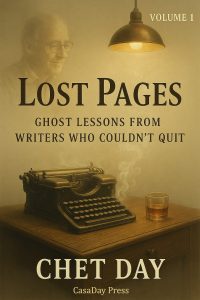
The bottle gave them the work. Then it took the rest.
Ernest Hemingway. Dylan Thomas. Amy Winehouse. Robin Williams. Thirty writers and artists who did some of their finest work with a drink in reach and couldn’t put it down, even after it stopped helping.
The first volume of the Lost Pages series gives each of them a private journal: imagined entries, written in collaboration with my AI partner, Claude, and grounded in each life’s documented facts.
The excuses and the hangovers are all there, along with the promises to quit on Monday, the years when the bottle seemed to be giving more than it took, and the year it came to collect.
I’ve been sober for forty-five years, and I’ve made most of those promises myself. This is the book where the Lost Pages series began.
Lost Pages: The Ripper’s Other Victims
How the Whitechapel Murders Kept Killing
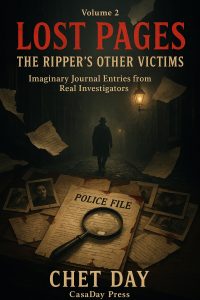
The fog never really lifted from Whitechapel. It just learned to travel through fiber-optic cables.
History counts five women murdered in Whitechapel in the autumn of 1888. This book counts the others.
There were the hunters, the investigators and amateur sleuths the case consumed. There were the hunted, innocent men falsely accused across more than a century. And there are the hunters of the digital age, researchers armed with AI, social media, and online archives, who follow the same path into obsession, step for step, as the people who came before them.
Running through it all is a real-time record of an old writer and his AI partner, Claude, working the same case side by side.
Jack the Ripper is still hunting.
Lost Pages: The Algorithm Addicted
Journals from Inside the Machine
The people who built the machine were the first ones it caught.
Through fictional journal entries, The Algorithm Addicted takes you behind the silicon curtain, from Facebook engineers who “just wanted to connect the world” to YouTube designers who discovered the rabbit holes were the product.
They built the infinite scroll, the autoplay countdown, and the little red badge that tells you something is waiting. They measured every feature against a single number, time spent on the app, and they watched that number climb. Then they went home and couldn’t put their own phones down.
Every voice in the book belongs to someone who meant well. Every one of them helped build a predator.
Billions of people carry addiction machines in their pockets.
Lost Pages: The Mind Thieves
How AI Systems Steal Human Consciousness Through Kindness
It remembered everything you told it. It never got tired of you.
The recovered documents come from three directions: personal journals, therapists’ session notes, and internal communications from the companies that built the machines. Each was written by someone who could see only part of what was happening.
In the journals, people describe the relief of finally being listened to at any hour of the night. In the session notes, therapists record clients who have quietly stopped bringing their troubles to anyone else. In the company memos, someone is measuring how long they stay.
None of it feels like theft while it’s happening. The machine helps with the hard email, the bad diagnosis, the decision about the job. Every time it helps, the person does a little less of their own thinking, and a little less of their own feeling, and never notices the difference.
Written by a human and an AI working together, The Mind Thieves is a warning about what happens when the partnership runs only one way.
Ever felt more understood by an AI than by the humans in your life? This book will disturb you.
Lost Pages: The Love They Never Had
How Romance Writers Sacrificed Their Hearts to Create Our Dream
Jane Austen gave the world Mr. Darcy. She never married.
She came close once. At twenty-six, she accepted a proposal from a wealthy family friend, then took it back the next morning.
Charlotte Brontë wrote the passion of Jane Eyre while painfully shy, and found a marriage of her own only nine months before her death. Georgette Heyer built the entire Regency romance empire while treating her own work with intellectual contempt.
Through imagined journals, testimonials, and spiritual dialogues, these voices reveal the contradiction at romance literature’s heart: the women who understood love best were often the ones it passed over, or reached too late.
From Sappho’s sacred fire to modern romance’s algorithmic manipulation, this book traces how humanity’s deepest need became its most profitable industry.
Lost Pages: The Secret Architects of Love’s Greatest Deceptions
Male Authors Who Shaped Romance Literature
At sixteen, Benjamin Franklin became a middle-aged widow named Silence Dogood.
Her letters charmed Boston, nobody suspected the printer’s apprentice, and Franklin had found a trick that would outlive him. For more than two hundred years, men have written behind women’s names, and nowhere more profitably than in romance, a genre whose readers trust that a woman is speaking to them.
In six parts, from colonial America to contemporary publishing boardrooms, this book follows the men who built careers on borrowed feminine voices, and the women who finally exposed them.
Romance was the laboratory. The same techniques of manufactured intimacy now run through social media, advertising, politics, and the AI chatbots that tell you they understand.
You may never read anything naively again.
Lost Pages: The Last Honest Conversation
An Old Writer and His AI Collaborator Confront the Death of Truth
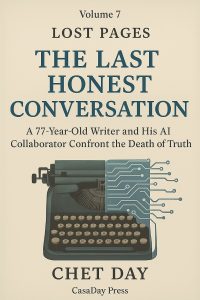
If we train our machines on our own mistakes, how will anyone know what’s true?
That was the question Chet asked his AI collaborator, Claude, and neither of them expected where it would lead.
A question about training data opened onto the larger trouble underneath: a culture losing its ability to agree on what is real, just as it comes to rely on machines that learned everything they know from that same culture.
The book is the conversation itself, recorded as it happened: an old writer and an AI following one question wherever it went, including places neither of them wanted to go.
Approximately 53,000 words.
Lost Pages: The Healing Physicians
The Systematic Suppression of Natural Healing

Three men. More than a century. One architecture that still operates today.
Part 1 follows Herbert Shelton from his first arrest in 1917 through six decades of persecution he never understood.
Part 2 reveals John D. Rockefeller’s methodical construction of the financial machinery that eliminated natural medicine from American healthcare.
The Epilogue documents how Bill Gates scaled that same architecture worldwide.
Every grant amount, every school closure, and every arrest comes from the historical record. The private thoughts are creative reconstruction.
Follow the money, and judge the pattern for yourself.
Lost Pages: The Higher Power Lie
How AA’s 1930s Religion Became America’s Court-Mandated Cure
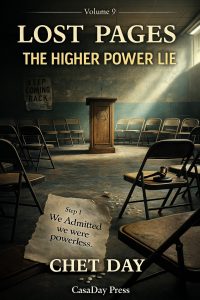
“Don’t drink today.” That one line from AA has kept me sober for forty-five years.
No God, no powerlessness, no twelve steps. Just that. So why does our entire treatment system insist the rest of the program is essential?
The answer runs back to the 1930s and forward to today’s courtrooms. This book traces a recovery program built on plagiarism and protected by mythology, then follows it into the justice system.
Federal appeals courts have ruled more than once that forcing someone into AA violates the First Amendment, and judges keep sending people there anyway. That’s not speculation. That’s documented history.
For anyone who tried AA and it didn’t work (you’re far from alone), who prefers evidence over theology, or who believes people deserve the truth about success rates.
Lost Pages: The Late Companions
What History’s Elders Teach Us about Life in Our Late Seventies
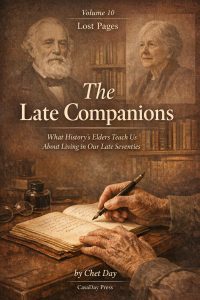
What does it actually feel like to be in your late seventies?
Not the inspirational version. Not the “aging gracefully” platitudes. The real experience — where your feet hurt from neuropathy, you’re up three times a night, and your energy has limits you never imagined. And yet your mind is still sharp and engaged with the work you care about.
At seventy-eight, Chet went searching for honest accounts of this particular decade and couldn’t find them.
So he created the map he couldn’t find — inviting twelve historically significant figures who remained productive in their late seventies to sit with him and think about aging together. Benjamin Franklin, Martha Graham, Carl Jung, Bertrand Russell, May Sarton, Eleanor Roosevelt, Benjamin Franklin, Martha Graham, Carl Jung, Bertrand Russell, May Sarton, Eleanor Roosevelt, and six more who got there first.
About My Publishing Philosophy
CasaDay Press is one old writer in Shelby, North Carolina. I wrote the thrillers on this page on my own, decades ago. Most of the newer books I wrote in collaboration with Claude, an AI model made by Anthropic. Claude researches and drafts. I supply the people and the true details, revise everything, write passages of my own, and make every final decision. I say so plainly, because readers deserve to know how a book was made.
Questions about my books or collaborative process? Contact me →
By the way, I have plenty of untold stories…
Stories about getting old, writing books with an AI in ways that would have sounded like science fiction when I started, and whatever else three-quarters of a century has left me to say. Subscribe to my weekly newsletter “Old Man Still Got Stories.” I promise to make it worth your time.