I gave away 991 copies of my book in two days, made zero sales, and got exactly one review for my trouble. And it wasn’t from a stranger.
That’s the headline. Everything below is me trying to figure out what it means, and I’ll warn you up front that the answer turned out to be more interesting than the failure.

I’m 78. I’ve published twenty-one books, two of them with Pocket Books back when the mail brought contracts and a paperback thriller could get you a check that made your wife whistle. In July of 2026 Claude and I created a thirty-day marketing campaign for my newest book, Wicked Imagination, out of the back bedroom of a house in Shelby, North Carolina, with no publicist, no publisher, and no plan B.
It didn’t work. Not “underperformed.” Didn’t work, the way a screen door doesn’t work on a submarine.
So here’s the autopsy, free of charge, from a man with no course to sell you.
Does a free Kindle promotion sell books in 2026?
It moves files. That’s not the same thing.
My free promotion ran two days and put 991 copies into six countries. The book hit #58 in Grief & Loss, which sounds like something until you remember that free books are ranked against other free books, which is a bit like winning a footrace where everybody else is also getting paid nothing.
Here’s the part nobody tells you: a free downloader is not a reader. They grabbed a book they’d never heard of, it landed in a queue behind eleven other free books, and there it sits like a casserole nobody wants in the back of the church freezer.
Zero organic reviews. Not one, from 991 downloads.
The math of it is worse than depressing, it’s structural. Amazon publishes somewhere in the neighborhood of 3,800 books a day. Nobody’s attention is scarce anymore. Attention is the only thing that’s scarce.
Do book promotion sites and media pitches still work?
We built a target list of six outlets and went five for five on closed doors.
Next Avenue, the PBS-affiliated over-50 outlet, doesn’t accept pitches anymore. It moved off its own website in May of 2026 and now republishes its back catalog through a newsletter. There’s nothing there to pitch. It’s a shelf.
Oldster Magazine — a wonderful publication built around a questionnaire about aging, which is practically designed for a man who won’t get on the telephone — has submissions paused. The editor says plainly she has more accepted pieces than she can publish and she’s running the whole operation by herself.
Same editor’s second publication, Memoir Land: paused. Modern Loss: no open calls.
That’s not bad luck. That’s a market. Every surviving editor in the personal-essay economy is buried alive under submissions, and the ones who aren’t buried have shut the door to keep from being buried.
Two of the promotional services I looked into wanted a minimum review count I didn’t have. One had a website that wouldn’t load. And a week after stopping the campaign, I’m still getting scam emails from outfits that scrape the free charts looking for gullible indie writers, which I mention only because those emails were the single most reliable evidence that anybody had noticed my book at all.
So what actually moved?
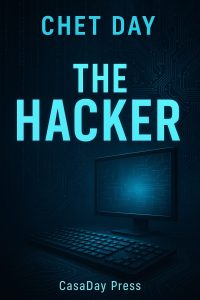
One thing. And I almost missed it.
The Hacker is a thriller I published in 1989. Prometheus Award nomination, back when Heinlein was still on the ballot. For seven months of 2026 it did nothing — a trickle of Kindle Unlimited pages, the reading equivalent of a dripping faucet.
Then, during the week my other book was moving, it did roughly a year’s worth of page reads.
Nobody arranged that. No promotion, no listing, no letter to an editor. Some human being came looking for Wicked Imagination, wandered onto my author page, decided the memoir wasn’t for them, and went home with a 1988 novel about bulletin board systems instead.
One reader. Reading a book about modems and monks and a computer program named Teresa, thirty-seven years after I wrote it.
That’s the whole return on the campaign. And it’s the only thing that happened that I couldn’t have bought.
The thing I had backwards
Here’s where I have to admit something.
Halfway through the month, working through all this with my AI collaborator — who I should mention is the best editor I’ve ever had and also the only one who’s never once told me a draft was “interesting” — I said out loud that money wasn’t really the issue. Widowed with no expensive habits, I don’t need the income. I want readers. People who find the stuff worth their time.
And the moment I said it, about half the campaign turned to vapor.
Because every bit of that machinery — the rank, the badges, the promotional stack, the sale I’d scheduled and then postponed and will now probably cancel — every bit of it was built to convert attention into dollars. None of it was built to produce readers. Rank is a proxy for readers, and a lousy one, the way a man’s shoe size is a proxy for how well he dances.
I’d spent valuable time optimizing the wrong number.
Meanwhile the number that mattered was sitting in my Substack dashboard, where it had been the whole time: a 63% open rate on 73 subscribers. Roughly forty-six people who open a thing I write every Tuesday morning and read it, because they want to.
Forty-six. That’s more people than show up to most poetry readings. They’re there every week. Voluntarily. Not one of them came from a promotion.
What I’d tell another writer
Promotion is dead. Propagation isn’t.
Promotion is borrowing somebody else’s audience — an editor, a chart, a promo site, an algorithm. Every one of those channels is closed, saturated, or scraping you for money. That whole system worked when gatekeepers were the bottleneck, and the gatekeepers are now the ones drowning.
Propagation is one person reading a thing and telling one other person. It doesn’t scale. Nobody sells a course on it. It runs at the speed of human beings actually reading, which is unbearably slow.
It’s also the only thing that produced a single result this month.
So here’s my long-term strategy for the rest of 2026, arrived at the expensive way: write the newsletter every Tuesday at 10:03. Put a line at the end of every one of my books telling a stranger where I live. Answer everybody who writes to me. Write the next book.
That’s it. That’s the plan. It looks exactly like what I’d be doing if I’d never run a campaign at all, which is either the joke or the point, and at my age I’ve stopped needing to know which.
One more thing, and then I’ll get out of your way.
My late wife Ellen died in November of 2019, after forty-seven years. She used to read my drafts in the next room and come out with one eyebrow up, which was how I knew a revision was needed.
I thought about her a lot this month, watching download numbers climb and mean nothing.
Because she’d have looked at the 991 and the #58 and the badge, and then she’d have looked at the one person somewhere in the world reading a 1989 thriller on a Tuesday afternoon for no reason anybody arranged.
And she’d have known which number I should be proud of.
She’d have had that eyebrow up the whole time.
Chet Day writes the weekly newsletter “Old Man Still Got Stories” from a back bedroom in Shelby, North Carolina. His books are at chetday.com/books. Want to reprint this article? Email me at chetday@gmail.com. I usually say yes.